
How to choose a baby carrier for a newborn
How to choose a baby carrier for a newborn: check the age and weight range, the baby's position and the fit on you. Includes the safety points to check.
Margaux Dupont6 min read

A newborn is small, floppy and needs careful positioning. A carrier can make the first weeks easier for you, but only if it is used safely. This guide covers how to choose one. It does not replace the maker's instructions or advice from your midwife, health visitor or paediatrician.
Read the maker's age and weight range first. If a carrier says it is for babies over a certain weight, it is not for your newborn, whatever the photos show.
The decision rule
Pick the carrier that has a newborn range from the maker, holds your baby high and close with the face visible, and feels comfortable on you for the time you plan to use it. If any of those three is missing, keep looking.
Safety first
The US Consumer Product Safety Commission has guidance on safe babywearing, including the risk of suffocation with some positions, and especially with very young babies. The International Hip Dysplasia Institute has guidance on positions and hip health. Read both. Your health professional can check your baby's position and answer questions that apply to your child, including babies born early or with medical needs.
General points that these sources and makers often repeat: keep the baby's face visible, keep the chin off the chest, keep the baby high enough to kiss on the head and check them often.
Ruling: if you cannot see your baby's face, change the position.
Types of carrier
| Type | Good for | Watch out for |
|---|---|---|
| Stretchy wrap | The first weeks, snug fit | Takes practice to tie, warm in summer |
| Structured carrier | Easy on and off, longer wear | Needs a newborn insert or newborn setting |
| Ring sling | Short trips, quick in and out | Load on one shoulder |
Fit on you
- Try it on with a weighted doll or a bag of flour before the baby goes in.
- Adjust the straps so the baby sits high on your chest.
- Check for comfort across the shoulders, and across the waist if there is a belt.
- Ask about size. Some carriers fit a wide range of bodies and others do not.
Many parents also find that two adults can use the same carrier if the straps adjust easily. Check that before you buy.
When to use it and when not to
Do not use a carrier when cooking over a hob, riding a bike or doing anything where you may fall. Bend at the knees and not the waist, and hold the baby with a hand when you do. The maker's manual will list activities to avoid.
Heat and comfort
Babies cannot control their body temperature as well as adults. In warm weather, choose breathable fabric and dress them lightly. In cold weather, avoid bulky coats between the baby and the carrier and cover them over the top.
Secondhand
Check for recall notices, missing buckles, loose stitching and fraying. Make sure the manual and the age range are available. If the history is unknown, think twice. Our comparison of carrier or stroller for the first months explains when a stroller may be the better choice.
What to ask a professional
Take the carrier to a midwife, health visitor or paediatrician visit if you can, and ask them to check your baby's position. Some areas also have local babywearing groups that offer fitting sessions. Ask about their training before you rely on their advice. A professional can also tell you if your baby has any needs that change the answer, such as being born early or having breathing or hip concerns.
Common mistakes
- Choosing by photos. Look for the maker's weight and age range and read the instructions.
- Skipping practice. Tying a wrap or setting straps is much easier when no baby is in it.
- Letting the baby slump. The chin should not rest on the chest.
- Overdressing the baby. Carriers add warmth. Dress them lightly.
- Buying a second carrier too early. Try one for a few weeks before you decide it is wrong.
A worked example
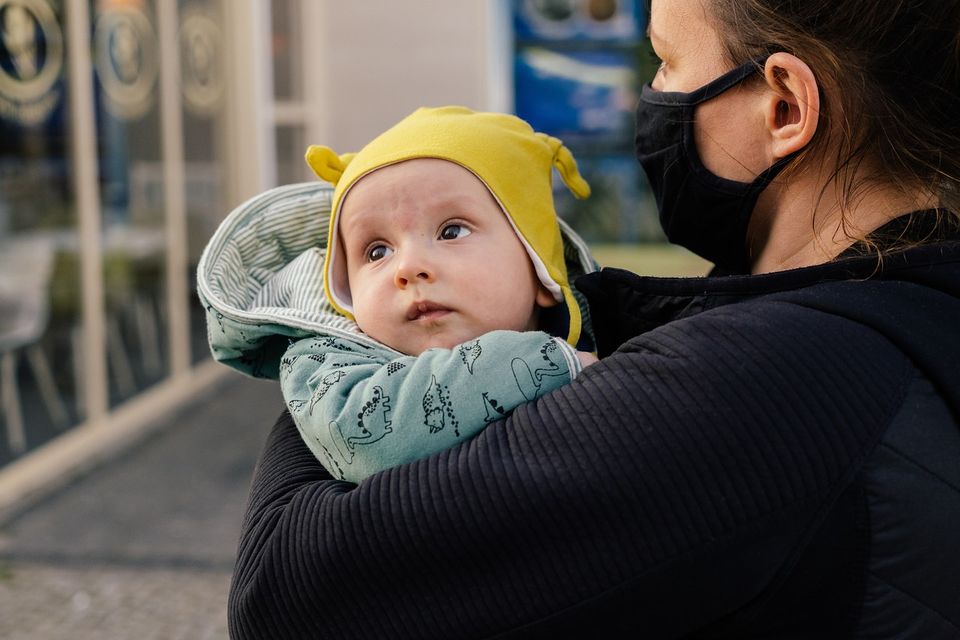
Say you live on a third floor with no lift, and your baby settles only when held. A carrier lets you use the stairs with both hands free. If instead you drive to a park and push a stroller on smooth paths, a stroller may do the job and the carrier might stay in a drawer. These are made-up homes, but they show why your days decide, not the list.
Who else can use it
If two adults will share the carrier, check how fast the straps change. A carrier that takes five minutes to adjust will be used by one person only. Ask whether the maker offers a fit guide or a video, and try it with a doll before your baby arrives.
Once you have a carrier, you may still need a bag that stays out of the way. Our comparison of a diaper bag and a backpack covers hands-free options, and the 3 am station is a short argument for setting up one corner of the home before the baby comes.
End of shift
- First to go: strap padding and the buckle clips.
- Friday check: stitching at the straps and clips.
- Wash: by the label, and check the fit again after.
Quick questions
When can a newborn go in a carrier?
Check the maker's age and weight range. Ask your health professional if your baby was born early or has a medical need.
Is a wrap or a structured carrier better?
Wraps are snug for the first weeks. Structured carriers are easier to put on. Choose on how you will use it.
How long can I carry my baby?
There is no one answer. Check on your baby often, take breaks and stop if either of you is uncomfortable.
What if my back hurts?
Adjust the fit and shorten the time. If pain continues, see a clinician.
More to read
Keep reading

The first week home: what actually gets used
A column on the first week home with a baby: a few things get used all day and most of the rest sits in a box. Argued from general experience, not a review.
Samir Ouali4 min read

The 3 am station: set up one corner before the baby arrives
A short argument for setting up one small feeding and changing corner before the baby arrives, instead of buying a room full of gear you will not use.
Margaux Dupont4 min read

Diaper bag vs backpack: what new parents actually use
Diaper bag vs backpack for new parents: the answer depends on pockets, hands and who carries it. Here is how to choose without buying a second bag.
Margaux Dupont4 min read
Baby carrier or stroller for the first months
A plain comparison of carriers and strollers for new parents: where each helps, where each fails, and the safety points to check with an official source.
Samir Ouali3 min read

How many newborn clothes do you need? A simple count
How many newborn clothes do you need? About seven to ten sleepsuits and bodysuits cover the first weeks if you can do laundry every few days.
Margaux Dupont2 min read
Do you need a bottle warmer? A quick answer
Do you need a bottle warmer? Usually no, since a bowl of warm water works. It helps for night feeds if you want a hands-off option. Here is the rule.
Samir Ouali2 min read